
Dallas–Fort Worth
Whole-Home Repiping in Dallas–Fort Worth
There comes a point where fixing one more leak is just feeding a pipe system that's finished. A repipe replaces the water lines in the house once, so you can quit keeping count.
- Price given before work starts
- Nothing starts until you approve it
- Repair tested before the plumber leaves
The plain facts
Every pipe material has a working life. Galvanized steel rusts from the inside until the opening is no bigger than a pencil. Gray polybutylene hardens over the years until a fitting cracks loose. Copper laid under concrete gets eaten into pits, and a pit ends as a pinhole. The first leak can be bad luck. By the second or third, the pipe is telling you its age, and the rest of the house has the same pipe from the same year.
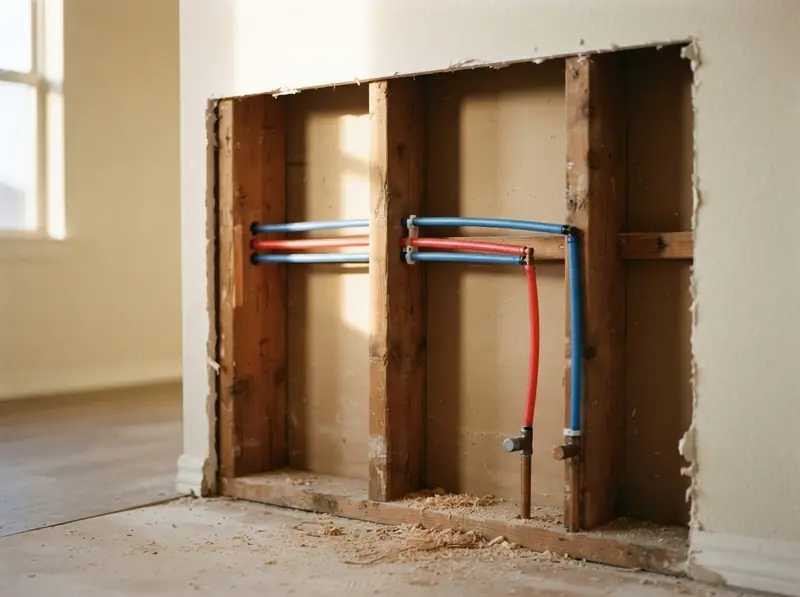
A repipe doesn't dig the old water lines out. It retires them in place and feeds every fixture from fresh pipe strung across the attic and dropped down through the wall cavities. Most often that pipe is PEX, sometimes copper. The slab is left alone. Walls are opened only where a line has to drop, and the openings are kept small and square so they patch cleanly. Drain lines are a separate system and aren't part of a repipe unless they need work too.
Signs a house is ready for new pipe
- Two or more leaks in the last couple of years
- Dull gray plastic pipe, or steel pipe with threaded joints, where the lines show: below the sinks and at the water heater
- A tap that runs rusty when first opened, then clears
- Pressure that fades when a second fixture is turned on
- Another slab leak on a line that has already been repaired
No surprises
How the job goes
Walk the house
We identify the pipe, count the fixtures, look over the attic and note which walls back onto plumbing.
Lay out the route and the price
The path of the new pipe, the walls that get opened and the cost of the whole job are all laid out ahead of your decision.
Run the new lines
New pipe goes in alongside the old system and the house is switched over a section at a time, so the water is normally off only during tie-ins.
Test, inspect, close up
The new system is pressure-tested, and inspected by the city where a permit applies, before any wall opening is closed.
How North Texas figures in
Two things make repiping common here. Builders here plumbed with polybutylene for close to twenty years, starting in the late 1970s and quitting in the mid-1990s, and a great many North Texas homes went up in that stretch. Older houses in the core cities still carry galvanized steel. And nearly everything sits on a slab over clay, so a leak below the floor can't be reached without a jackhammer or a tunnel. Running new lines overhead takes the slab out of the question. Pipe in an attic does need insulating, though. The February 2021 freeze split plenty that had none.
Questions about repiping
PEX or copper?
Both make a sound system. PEX is flexible, so it turns a corner without a fitting, it stands up to a freeze better and the labor bill is smaller. Copper is stiff, has a long record behind it and doesn't mind heat. We'll say which we'd use in your house and why, and then it's your call.
How much of my wall gets opened?
Less than most people expect. The lines run through the attic and drop inside the wall behind each group of fixtures, so the openings are at those drops and not along the whole run.
Does a repipe include the drain lines?
No. A repipe replaces the pressurized water lines. Drains and the sewer are a separate system with their own troubles, mostly cast iron in homes built before the 1980s. If yours are acting up, say so and we'll look at both.