
Fort Worth, TX
Plumber in Fort Worth, Texas
Fort Worth has been building houses for well over a century, and every era left its own kind of pipe in the ground. What a plumber finds here depends mostly on the neighborhood.
- The price reaches you ahead of the work
- You're shown what gave out, and told why
- The work area is left clean
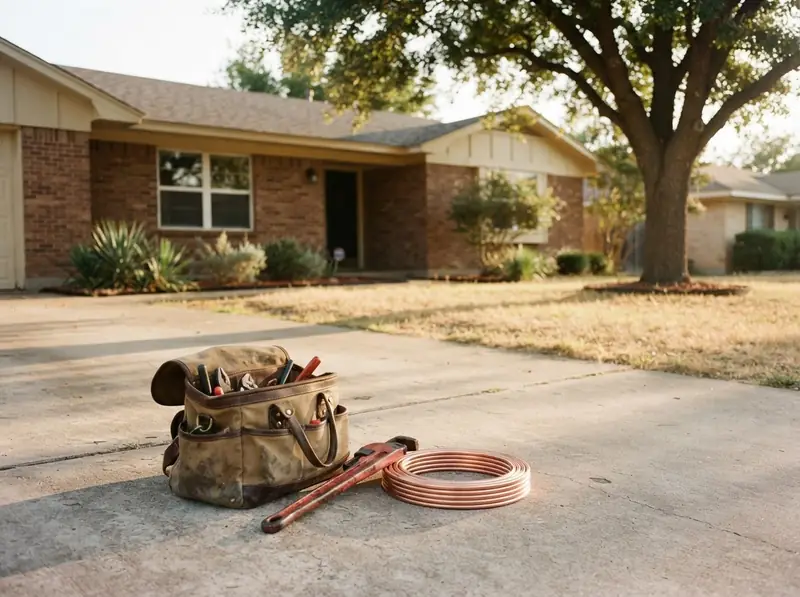
Fort Worth houses and their plumbing
The oldest parts of town, like Fairmount and Ryan Place, are full of early-1900s houses on pier-and-beam foundations, many still carrying water lines of galvanized steel and drains of cast iron or clay. Arlington Heights, Meadowbrook, Ridglea and Wedgwood run from the 1920s through the 1960s, and the cast iron under those floors has had a long time to rust. Mature trees send roots into sewer joints all through the central city. The far north side, around Park Glen and on toward Alliance, was built from the 1990s on, and the work there is mostly water heaters, slab leaks and fixtures worn by hard water.
Plumbing work we do in Fort Worth
Fort Worth questions
Do you work in every part of Fort Worth?
Yes. All of Fort Worth is in our service area, along with the neighboring towns listed on this page.
Does replacing a water heater in Fort Worth need a permit?
Most North Texas cities require a permit and an inspection for a water heater replacement, and gas line and repipe work generally need them too. The city's building inspection office has the last word on what applies at your address.
Is the water in Fort Worth hard on plumbing?
It is. Like the rest of North Texas, Fort Worth has water that carries enough mineral to leave scale. It settles in water heaters and wears out faucet cartridges and toilet fill valves early. Flushing a tank heater once a year and descaling a tankless unit are the two habits that pay.