
Dallas–Fort Worth
Water Heater Repair & Replacement in Dallas–Fort Worth
A water heater rarely quits without warning. We find out whether yours needs a part or has reached the end, and you hear which before any work starts.
- Price given before work starts
- Nothing starts until you approve it
- Repair tested before the plumber leaves
The plain facts
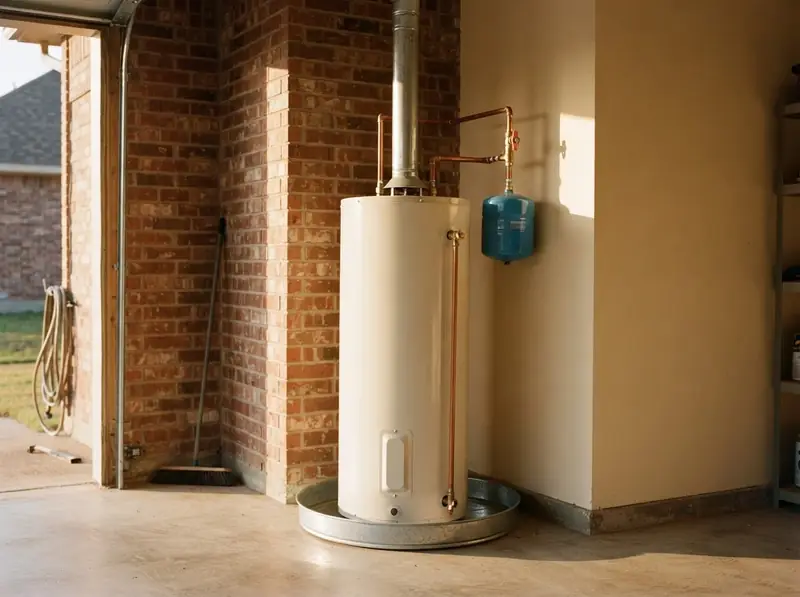
There isn't much to a tank water heater. Steel tank. Heat source, which is a gas burner below or two electric elements inside. A thermostat to mind the temperature, and a few parts whose only job is safety. For the first eight years or so, most of what goes wrong is one of those parts. A thermocouple or igniter on a gas unit. An element or thermostat on an electric one. A relief valve that has started to weep. Those are repairs, and they're usually worth making.
The tank is another matter. Once the steel rusts through, no part will fix it, and a tank that seeps today can split tomorrow and keep running until somebody shuts the water off. Most tanks in this part of Texas last eight to twelve years. Past that, or any time water is coming from the tank itself, replacement is the straight answer and we'll say so.
How a water heater tells you it's in trouble
- Hot water runs out sooner than it used to
- Rumbling, popping or knocking while the tank heats
- Rust-colored water or a metallic smell from the hot tap only
- Standing water in the pan, or a dark wet halo on the concrete at the foot of the tank
- On gas, a pilot that quits every time you light it. On electric, a breaker that trips again as soon as it's reset
No surprises
How the job goes
Look the whole unit over
Gas or power supply, burner or elements, controls, venting, relief valve and the tank itself. We read the age off the data plate while we're there.
Give you the prices
If a repair is sensible you get that price. If the tank is on borrowed time you get the replacement price too, and you choose.
Do the work the way the code asks
A replacement gets proper venting, a pan and drain line, new shut-off and supply connections, and an expansion tank where your city requires one.
Fill it, fire it, test it
We purge the air, light it or power it up, check every joint for leaks and confirm it's making hot water before we pack up.
How North Texas figures in
North Texas water runs hard, and the minerals that make it hard settle to the bottom of a tank as sediment. That layer is the rumbling you hear. It also makes the burner heat through a blanket of scale, which shortens the life of the tank. A yearly drain of a few gallons off the bottom slows the buildup. A good many two-story homes here have the water heater in the attic, where a leak does its damage on the way down, so the pan and its drain line matter more than they look. Most cities in the Metroplex require a permit and an inspection when a water heater is replaced.
Questions about water heaters
Is it worth repairing an older water heater?
That depends on the age and on what failed. A new part on a six-year-old tank that's dry and sound is money well spent. The same part on a twelve-year-old tank mostly buys time. If the tank itself is leaking, there's nothing left to repair.
How long should a tank water heater last around here?
Eight to twelve years is a fair expectation in hard-water country. Tanks that get flushed and have the anode rod checked tend toward the long end. The date of manufacture is coded into the serial number on the data plate, so the age is easy to settle.
Why is there water in the pan under my water heater?
There are three usual suspects: a relief valve that drips, a fitting on top seeping down the side, or the tank itself. The first two can be fixed. Until someone has looked at it, close the cold supply valve above the heater. On a gas unit, turn the control knob to off. On an electric one, flip its breaker.